
Important Update Know the BMSB requirements this risk season 26-27
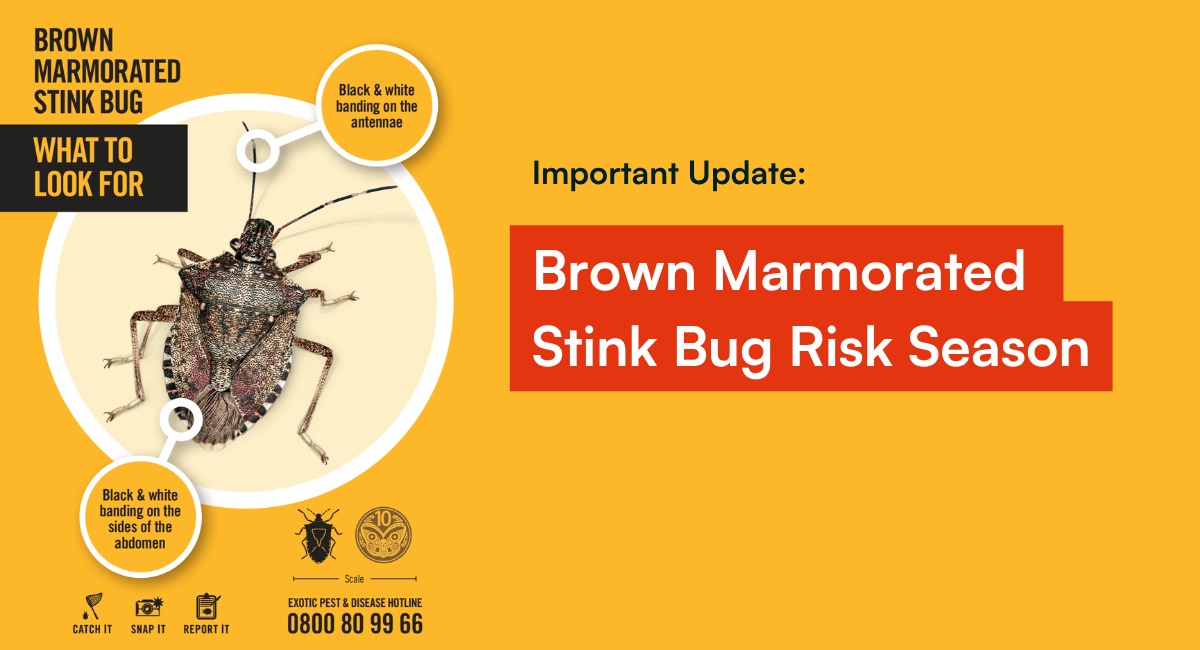
Here's a guide for New Zealand importers to ensure seamless border clearance during the Brown Marmorated Stink Bug (BMSB) risk season that officially runs from 1 Sep 2026 to 30 Apr 2027.
What's new this BMSB risk season?
Biosecurity rules are updated regularly to combat the spread of this destructive pest. For the current 2026–2027 cycle, importers must take note of the following critical adjustments:
- Ethyl Formate Treatment: Ethyl Formate remains fully available as an offshore and onshore treatment option to add flexibility for compliant cargo.
- Policy Removals: The previous Safeguarding Arrangement Scheme and the Rolled Goods Policy have been completely removed. All standard seasonal rules apply to high-risk cargo without exception.
- Strict Shipping Windows: "Gate-in" dates or estimated sailing timeframes are no longer accepted as proof of shipping. Compliance is evaluated purely on the final "shipped on board" date.
- Targeted Airfreight Audits: Airfreight arriving from the United States and China, alongside goods from emerging risk countries, face continued random biosecurity inspections.
Key dates for BMSB risk season?
The BMSB risk season officially begins on 1 September 2026. The measures apply to target goods that are exported on or after this date. The season concludes on 30 April 2027.
Key requirements for NZ importers include:
- Reducing storage times of goods.
- Segregating goods to prevent contamination.
- Applying chemical treatments before export from the country of origin.
MPI also conducts inspections on specific goods to ensure compliance.
Who needs to prepare for BMSB risk?
Importers of new and used vehicles, machinery, and parts from the 38 BMSB-risk countries are required to prepare. The measures also apply to sea containers originating from Italy. Additionally, vessels that berth, load, or tranship from these target risk countries between September 1st and April 30th are subject to the measures.
Ensure compliance with your imports this BMSB risk season
Importers must apply for a biosecurity clearance and provide supporting documentation. MPI inspects specific goods arriving from risk countries throughout the season. Non-compliant cargo, particularly break-bulk, may be directed for re-export with no allowances.
Importers and the public are also obligated to report any sightings of the pest to MPI.
Treatment
All treatments must be carried out before arrival in New Zealand by an MPI-approved offshore treatment provider.
Goods treated by an unapproved provider will be re-exported or treated onshore if permitted.
Exemptions
There are specific exemptions from the BMSB management requirements. Certain new, unused, and not field-tested (NUFT) goods—such as new machinery, jet skis, parts, tyres, and smaller vehicle types (e.g., ATVs, motorcycles)—are exempt from treatment if they are stored indoors, exported in a fully enclosed container, and a signed manufacturer's declaration is submitted to MPI before arrival.
Additionally, goods packed and sealed in a container before 1 September and exported before 1 October may also be exempt, provided evidence of sealing is provided.
Are NZ and Australia aligned in their BMSB management measures?
While New Zealand and Australia have aligned their BMSB management measures in areas like risk countries and approved treatment providers, some key differences exist.
It's important to note that the Australian measures are for goods imported into Australia, and Australia will not perform BMSB treatments for goods transshipping to New Zealand.
References:










%20copy.webp)


.jpg)


