
Update: Storms, Congestion & Seasonal Pressure
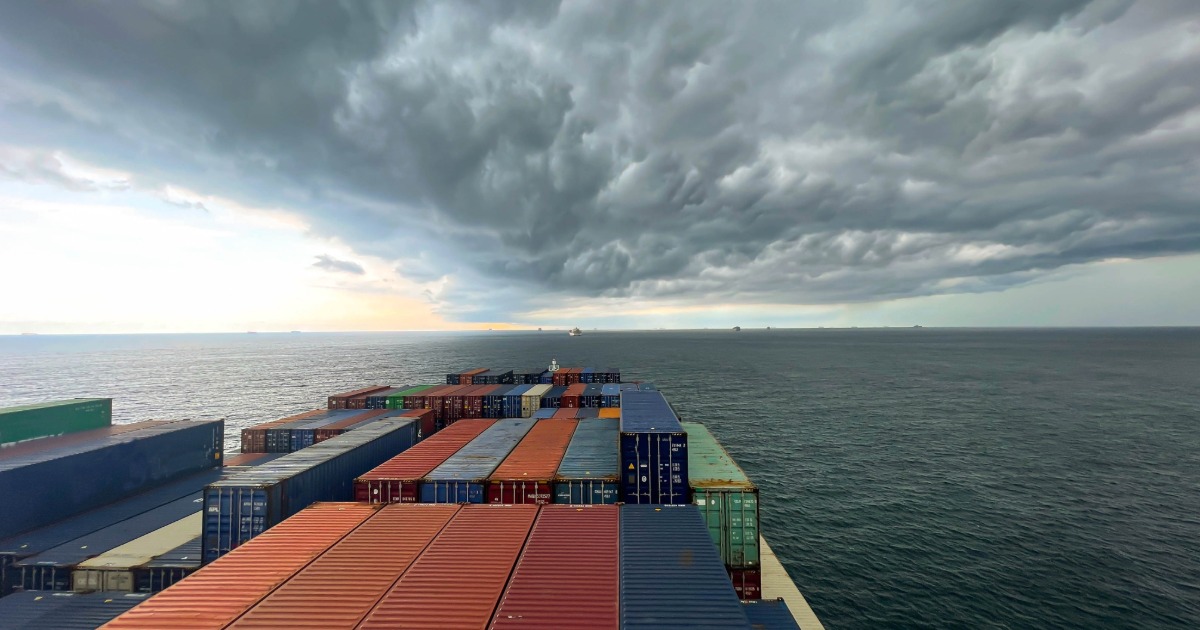
Global supply chains are entering a challenging period as successive typhoons across East Asia, ongoing Red Sea disruption, and the approaching Chinese holiday season continue to place pressure on capacity, schedules, and transit times.
A convergence of severe typhoons, Red Sea disruptions, and upcoming Asian holiday cut-offs is placing heavy pressure on global ocean and air freight capacity. With port congestion topping 4.3 million TEU, space remains tight and transit times continue to stretch across key trade lanes. This operational update outlines current market challenges and offers practical strategies to help secure capacity and minimise shipment delays.
Successive typhoons continue to disrupt East Asian supply chains
East Asia’s typhoon season continues to impact shipping operations, with a series of storms causing vessel delays, cargo backlogs and increasing congestion across several major ports.
Typhoon Narra recently hit southern China, adding to disruption already caused by Typhoons Bavi, Noul and Dolphin. Meanwhile, Typhoon Saudel is forecast to affect the Zhejiang and Fujian coastline, which is home to key shipping gateways including Ningbo and Xiamen.
As a result, global container port congestion has risen to more than 4.3 million TEU waiting to berth, with North Asian ports accounting for approximately half of the total congestion. Delays, schedule changes, vessel omissions and cargo rollovers remain common across affected trade lanes.
4.3 MILLION TEU
Global container port congestion has climbed to a new high, with more than 4.3 million TEU currently waiting to berth worldwide. North Asian ports account for approximately half of the total congestion.
Customers shipping through China, Taiwan, Japan and the wider Asia-Pacific region should allow additional lead time where possible and discuss time-sensitive shipments with their account manager at the earliest opportunity.
Asia-Oceania capacity and holiday outlook
Spot rates on the Asia-Oceania trade lane are currently adjusting, and space is extremely tight as September progresses and carriers prepare for the peak-season period.
Further pressure is expected ahead of China’s Mid-Autumn Festival, from 25th to 27th September, and the National Day holiday, from 1st to 7th October. The build-up to these holidays can create a concentrated increase in cargo volumes, reduced availability and tighter port receiving cut-offs.
Customers with cargo ready during late September or early October are encouraged to confirm shipment plans and secure space in advance. This will help reduce the risk of rollovers, delays and last-minute cost increases.
Plan Ahead
Important Dates

Mid-Autumn Festival 25th-27th September
National Day Holiday 1st-7th October
Peak season demand
Ongoing port congestion
The combination of holiday cargo surges and ongoing port congestion means late September and early October are expected to be particularly busy periods for Asia-Oceania trade.
Import Air
Air cargo demand continues to climb
Global air cargo demand increased by 8.5% year on year in June 2026, according to the latest figures from IATA. Capacity grew by 4.4% over the same period, meaning demand is currently increasing considerably faster than available capacity.
For NZ importers, particularly those sourcing from key Asian markets, this may result in tighter space and firmer rates on popular routes as we approach the traditionally busy final months of the year.
Where possible, we recommend planning time-sensitive air freight movements early, particularly for larger consignments or shipments with fixed delivery deadlines.









%20copy.webp)


.jpg)


